Jun 14, 2016
mustardwithmutton

no comments

Golden Syrup & Macadamia Tart

Golden Syrup & Macadamia Tart

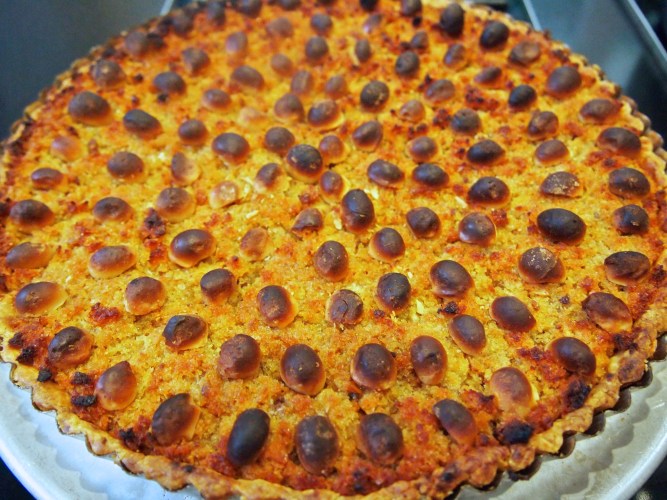
Although this tart tastes and looks indulgent the recipe is surprisingly frugal in its ingredients and composition. The Cucina Povera that we hear so much about in Mediterranean  cuisine existed here and in England too after the war when food rationing meant that housewives had to be extra inventive to create tasty appealing meals, and this tart is a prime example. You would never think that the filling of this tart is made from stale breadcrumbs and golden syrup, in fact it tastes and has the texture of a fancy frangipane filling. Granted the macadamias are a touch of extravagance, although maybe not so much back then, and if you wish you can always replace them with almonds or hazelnuts but the macadamias do add a lovely richness. This is such an easy tart to make and every time I serve it I get asked for the recipe. You can dress it up for dessert by serving it with ice cream but it’s just lovely on its own with a cup of coffee or tea.

Ingredients   Adapted from Ben O’Donoghue

For the Pastry
1⅔ cups (250g) plain flour
100g chilled unsalted butter, chopped
2 tablespoons icing sugar, sifted
2 egg yolks

For the Filling
3¼ cups (225g) fresh breadcrumbs
100g unsalted butter
1¼ cups (440g) golden syrup
Grated zest of 1 orange, plus 3 tablespoons juice
Pinch of freshly grated nutmeg
1 cup (150g) macadamia nuts, halved – you can also use hazelnuts or almonds

Method

For pastry, pulse flour, butter and a pinch of salt in a processor, then whiz until mixture resembles fine breadcrumbs. Add sugar and yolks, then whiz until mixture forms a ball (add 1-2 tbs cold water if needed). Knead on a lightly floured surface for 1-2 minutes until smooth, then enclose in plastic wrap and chill for 30 minutes.

Grease a 24cm loose-bottomed tart pan. Grate chilled pastry over pan and use clean hands to evenly press into base and sides. (Pastry with a high butter content can be hard to work with, and this is an easy method that doesn’t need a rolling pin.) Chill for 15 minutes.
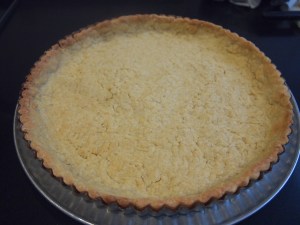
Preheat the oven to 200°C. Line pastry with baking paper and fill with pastry weights or uncooked rice. Bake for 10-12 minutes. Remove weights and paper, then bake for a further 5-8 minutes or until tart shell is light golden brown and the base is cooked. Set aside.
Golden Syrup Tart Golden Syrup & Macadamia Tart

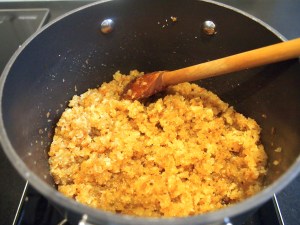
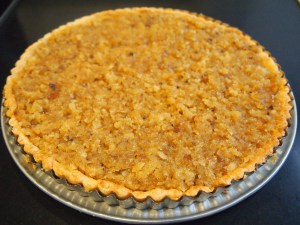
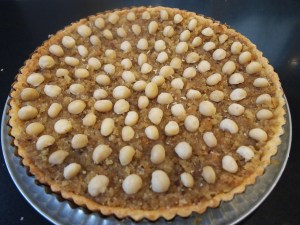
Meanwhile, stir breadcrumbs, butter, syrup, zest, juice and nutmeg in a pan over low heat until butter is just melted and mixture is combined. (It’ll be slightly loose at first, but the bread will start to thicken mixture.) Tip mixture into the tart shell and arrange nuts, cut-side down, in a concentric pattern on top. Bake for 25-30 minutes until filling is firm to touch in centre. Cool for 15 minutes in the pan. Carefully remove the tart from the pan, then dust with icing sugar and serve warm or cold.
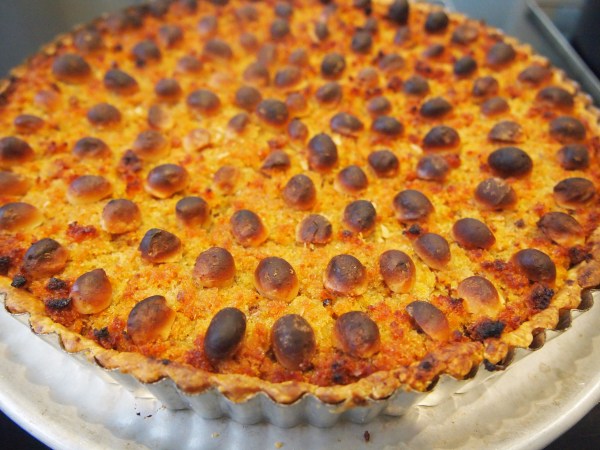
Golden Syrup & Macadamia Tart

Jun 3, 2016
mustardwithmutton

no comments

Shrimp Étouffée – A New Orleans Classic

Best Ever Étouffée - A New Orleans Classic Dish

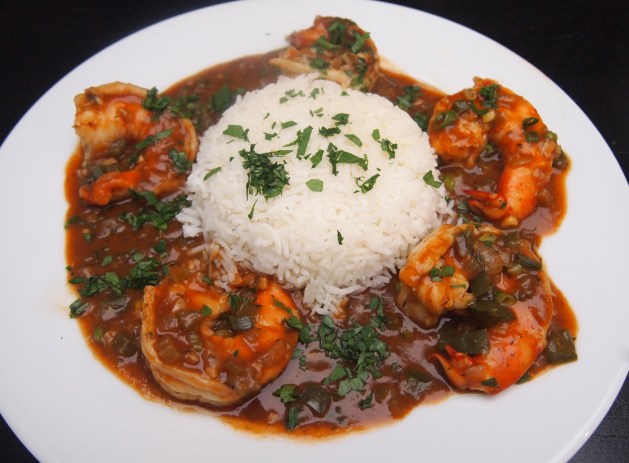
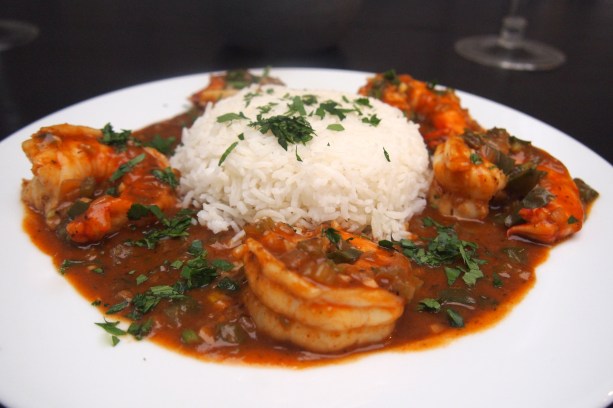
Creole food is not something that’s commonly available in Sydney which is a shame as the food from that region is really delicious. So when I get a craving for Cajun food I whip up one of my favourites – Étouffée.  Étouffée is basically a thick stew that is made with a roux which is cooked until golden brown to ensure that it’s full of flavour and colour. It’s extremely important to cook your butter and flour until it’s a deep deep brown, otherwise the gravy will be insipid.  By the way this is also a great method to use when you want to make a gravy but your pan drippings are too meagre to give a full-bodied colour to your sauce. The shellfish traditionally used in Étouffée is crawfish but as crawfish can be hard to come by shrimp is more commonly used, nice big ones if possible. Étouffée is usually served with lots of rice to mop up the delicious gravy and the classic presentation is to plate a nice circular mound of rice in the centre of a plate (use a small bowl to shape the rice) and then pour the shrimps and gravy around the rice – it looks as good as it tastes!
Ingredients – Serves 4

2 tablespoons oil
4-5 whole shrimp per person, peeled and deveined (reserve the shells and heads)
3 bay leaves
1 teaspoon tomato paste
2 cups best quality chicken stock
1 cup water
60g butter
⅓ cup flour
1 teaspoon dried thyme
1 teaspoon dried oregano
1 teaspoon paprika
½ teaspoon cayenne pepper
1 teaspoon salt
A large pinch of freshly ground black pepper
1 large onion, finely diced
1 cup celery, finely diced
1 green capsicum, finely diced
4 cloves garlic, minced
3 spring onions, sliced
¼ cup chopped parsley
4 cups cooked white rice

Method

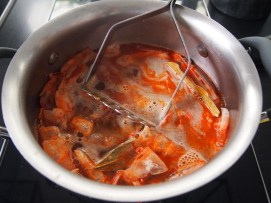
Heat the oil in a saucepan over high heat, add the shrimp shells and heads, along with the bay leaves and tomato paste. Cook, pressing down hard on the shells with a potato masher or the back of a spoon (this releases all their lovely shellfish flavour), until the shrimp shells are seared and turned red, and the heads are soft. Add the chicken stock and water, and simmer for 15 minutes.  Strain the stock through a sieve, you should have roughly 2 cups of shellfish stock. Set aside.

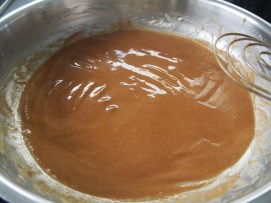
Étouffée Stock Étouffée Roux 

Melt the butter in a large saucepan over medium heat, and gradually whisk in the flour making sure there are no lumps. Continue to cook, whisking the roux over medium low heat until it turns a deep brown colour. This can take up to 10 minutes depending on your heat but make sure you whisk constantly to avoid the roux burning and turning bitter. As the roux cooks it will smell lovely and toasted – getting a nice deep colour on the roux is the most essential step in the recipe.

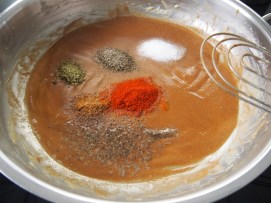
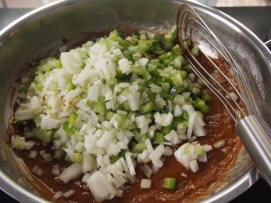
Add the thyme, oregano, paprika, cayenne, salt, and pepper to the roux. Mix well to combine all of the spices. Add the onion, celery, capsicum, and garlic to the pan and stir and cook for a few minutes until the onions have started to softened a little. Again moderate your heat so as the roux doesn’t burn.

How to Make Étouffée  Shrimp Étouffée

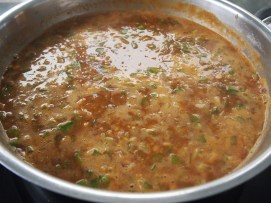
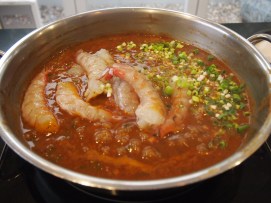
Add the stock, stirring the whole time. Bring to a simmer and cook over low heat for 30 minutes, stirring occasionally . Increase the heat and add the peeled shrimp and spring onions. Stir everything together until the shrimp is just cooked and changed colour. To serve, place some rice in the middle of each plate and pour the étouffée around the rice,  garnish with the chopped parsley.

Cajun Classic Recipe for Shrimp Étouffée

May 24, 2016
mustardwithmutton

no comments

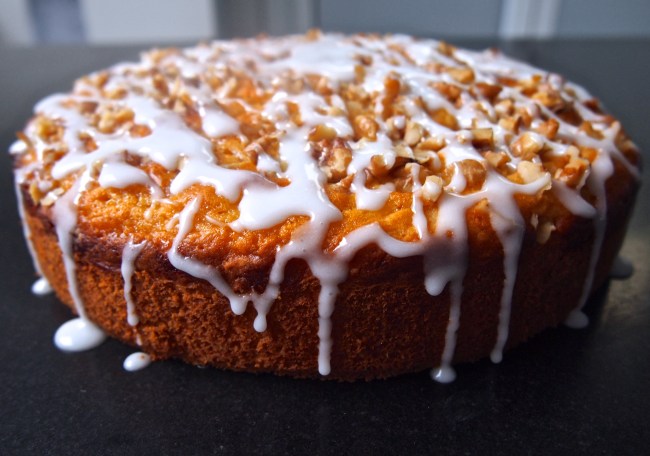
Apricot & Walnut Buttermilk Cake

An Autumn Cake - Apricot & Walnut

As the weather finally starts to get cooler in Sydney I find myself more willing to crank up the oven and do some baking. Those hot humid days of summer are more suited to fruit and ice creams but nothing beats a nice moist cake with a hot cup of tea or coffee on a brisk autumn day. I’m a big fan of cakes which include buttermilk, they always have such a nice crumb and are wonderfully moist. This coffee cake is no exception and has the added bonus of using two of my favourite ingredients – walnuts and apricots! This is an easy cake to pull together, in fact you won’t even need to pull out your stand mixer, but like all cakes you’ll get the best results if you measure carefully and make sure all your ingredients are at room temperature.

Ingredients

For the cake:
2 cups plain flour
3 teaspoons baking powder
½ teaspoon baking soda (bi-carbonate of soda)
¼ teaspoon salt
⅓ cup diced dried apricots
2 large eggs, at room temperature
1 cup buttermilk, at room temperature
½ cup plus 1 teaspoon sugar, divided
¼ cup (60g) unsalted butter, melted
⅓ cup apricot jam or preserves
¼ cup chopped walnuts
For the glaze:
1 cup icing sugar, sifted
2½ tablespoons buttermilk
Method

Preheat oven to 180C. Lightly grease a 9-inch round cake pan. For easier removal of cake from the pan, line the bottom of the pan with parchment paper and lightly grease parchment. Whisk together flour, baking powder, baking soda, and salt in a large bowl. Add the apricot pieces and whisk to combine.


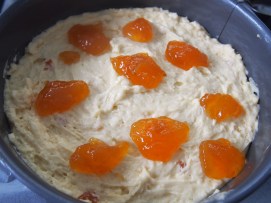
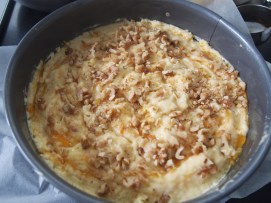
Whisk together eggs, buttermilk, ½ cup sugar, and butter in a separate bowl. Pour liquid ingredients into dry ingredients and stir to until just combined. Spread batter evenly in prepared pan. Dollop jam by teaspoonfuls over batter and swirl with a knife. Sprinkle walnuts on top of batter. Sprinkle remaining 1 teaspoon sugar on top of walnuts.

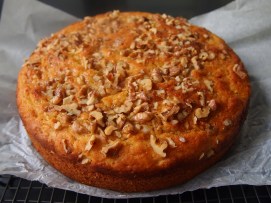
 Apricot & Walnut Coffee Cake 

Bake for 35 to 40 minutes, until a toothpick or cake tester inserted in the centre comes out clean. Cool cake in the pan for 10 minutes on a wire rack. Remove cake from pan and cool completely on a wire rack.

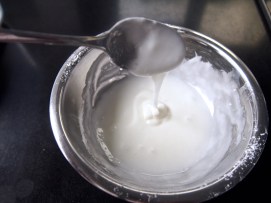
For the glaze: Stir together icing sugar and buttermilk in a small bowl until smooth. Drizzle glaze over cake.
Apricot & Walnut Coffee Cake

May 13, 2016
mustardwithmutton

1 comment

Ina Garten’s Seafood Gratin

Best Dinner Party Seafood Dish - Seafood Gratin

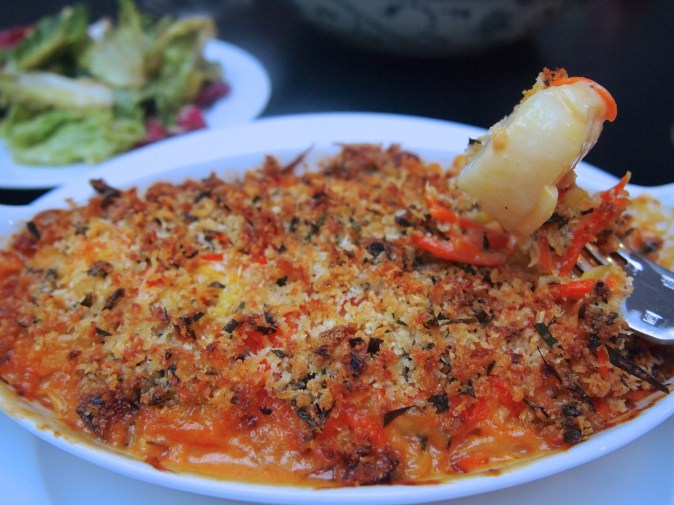
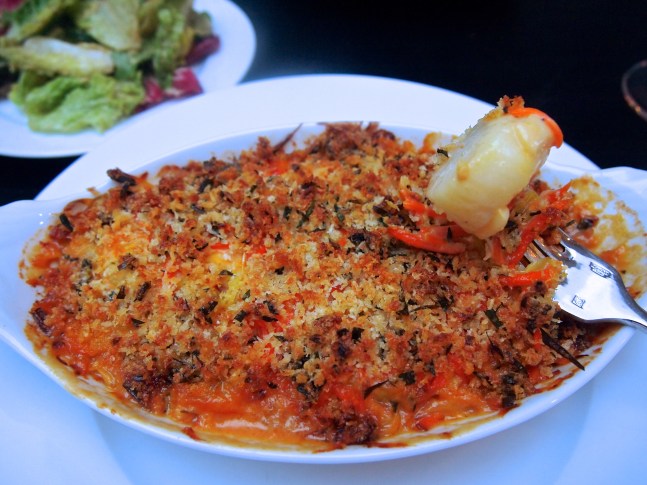
I’ve been making this delicious seafood gratin for a quite a while. It’s a great recipe to have in your repertoire for when you’re entertaining and want a dish that can be fully prepared in advance but I also cook it regularly just for us. The original recipe calls for lobster as part of the seafood mix but I do sometimes leave it out when I’m feeling parsimonious and use scallops instead which I think work just as well. One thing that you can’t replace or miss out is the saffron which adds that wonderful aroma and richness that you find in great seafood bisques from the South of France. I like to serve these in individual gratin dishes which makes for lovely presentation and ensures everyone gets their own greedy amount of crunchy breadcrumb topping.

Ingredients Serves 4  Adapted from the Barefoot Contessa, Ina Garten

1 cup seafood stock or clam juice – I sometimes use chicken or vegetable stock
1 cup cream
½ a cup plus 3 tablespoons white wine – I use chardonnay
3 tablespoons tomato paste
½ teaspoon saffron threads
250g raw shrimp, peeled, deveined, and cut in half crosswise
250g raw firm fleshed white fish, cut into1-inch chunks – I use snapper or blue eye cod
250g cooked lobster meat, cut into 1-inch chunks – you can replace with raw scallops
100g unsalted butter, divided
1 tablespoon all-purpose flour
Salt
Freshly ground black pepper
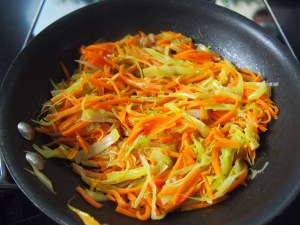
2 leeks, white and light green parts finely julienned into matchstick size pieces
3 carrots finely julienned into matchstick size pieces
1 cup panko (Japanese dried bread crumbs)
⅓ cup freshly grated Parmesan
2 tablespoons minced fresh flat-leaf parsley
1 tablespoon chopped fresh tarragon leaves
1 tablespoon minced garlic

Method

Preheat the oven to 180C. Place 4 individual gratin dishes on a sheet pan. Combine the stock, cream, ½ cup of the wine, the tomato paste, and saffron in a medium saucepan. Bring to a boil, lower the heat, and add the shrimp. After 3 minutes, use a slotted spoon to remove the shrimp to a bowl. Add the fish to the stock for 3 minutes, until just cooked through, and remove to the same bowl. Add the cooked lobster to the bowl. If you are using scallops instead of lobster cook it in the stock mixture for 3 minutes also and remove.

Continue to cook the sauce until reduced by half, about 12 minutes. Mash 1 tablespoon of the butter together with the flour. Whisk the butter mixture into the sauce along with 1 teaspoon salt and 1/2 teaspoon pepper. Simmer, stirring constantly, until thickened, about 5 minutes. Set aside.

Melt 3 tablespoons of the butter in a medium saute pan. Add the leeks and carrots and cook over medium heat for 5 minutes, until softened. Add the remaining 3 tablespoons of wine, 1/2 teaspoon salt, and 1/4 teaspoon pepper and cook for 5 to 10 minutes, until tender. Set aside.

Combine the panko, Parmesan, parsley, tarragon, and garlic. Melt the remaining 3 tablespoons of butter and mix it into the crumbs until they’re moistened. Divide the seafood among the 4 gratin dishes. Strew the vegetables on top of each dish. Pour the sauce equally over the seafood and vegetables and spoon the crumbs evenly on top. Bake for 20 minutes, until the top is browned and the sauce is bubbly. Serve hot.

Best Seafood Main Meal for Entertaining - Seafood Gratin

May 3, 2016
mustardwithmutton

1 comment

Chicken Kapitan – Malaysian Chicken Curry

Malaysian Chicken Curry - Kapitan Chicken

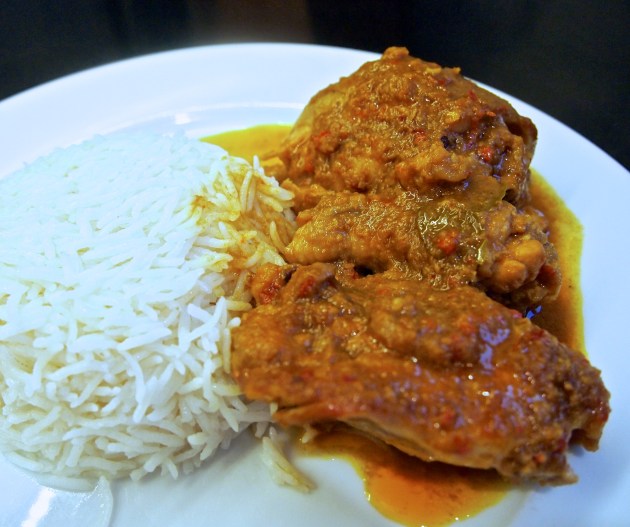
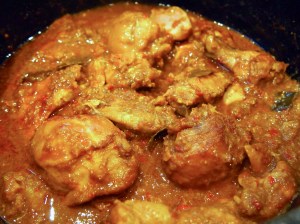
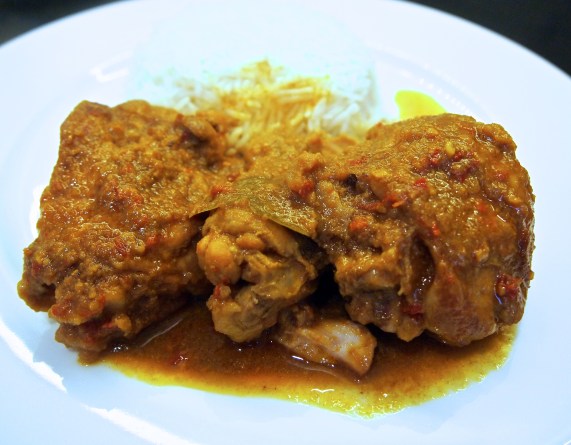
I adore Malaysian food, especially their curries which combine all the characteristics of Indian curries along with Chinese and Malaysian flavours, so you can imagine just how flavour packed they are. This particular curry is a Nyonya adaptation of an Indian curry and it’s one of my all time favourites. The principle of all Chicken Kapitan recipes are similar in that a wet spice paste is made and slowly fried off before chicken is added and then coconut milk. What varies is the spices used in the paste and how wet or dry the end curry is. I’ve developed the recipe below over a long period of time and for me it really captures all the great flavours of Malaysia. I recommend using chicken thighs over breast meat and I prefer using chicken on the bone which gives the curry more flavour than boneless pieces. Make more of this curry than you think you will eat as people always go for seconds and it also freezes well.

Ingredients – Serves 4-6 

1.5 kg chicken pieces – I like to use a mixture of thighs, drumsticks and wingettes
½ teaspoon turmeric
3 teaspoons fish sauce
Neutral tasting vegetable oil or coconut oil
1 cup coconut milk
1 ½ cups water
1 tablespoon brown sugar
1 teaspoon salt
1 best quality chicken stock cube
6 lime leaves, crushed lightly to release aroma

For the Paste:
10 small shallots, roughly chopped
5 cloves of garlic
1 inch piece of ginger, chopped
3 long fresh red chillies – deseeded and roughly chopped
10 long dried red chillies soaked in boiling water for 30 minutes, drained and roughly chopped
6 candlenuts – available in Asian grocers but you can replace with macadamia nuts if you can’t find any
1 tablespoon Balachan (dried shrimp paste)
1 tablespoon tumeric
1 stalk lemon grass – tender bottom third only, finely sliced

Method

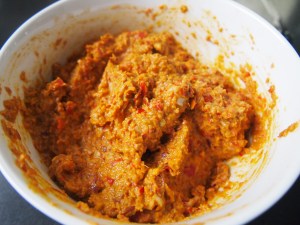
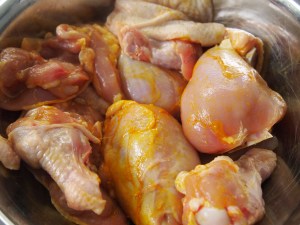
Place the chicken pieces in a large bowl and add the turmeric and fish sauce. Mix well to coast the chicken and leave to marinate for 20 minutes. To make the spice paste add all the ingredients to a blender (you can also use a food processor but a blender will give better results) along with a splash of water and blend until a fine paste is formed. This can take a little bit of time so let the blender go for as long as necessary.

Kapitan Chicken Spice Paste

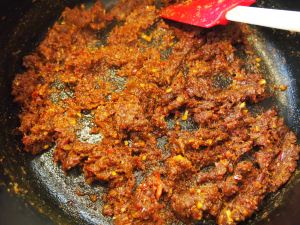
Add a generous amount of oil, at least ¼ of a cup to a heavy bottomed pan. When the oil is hot add the spice paste and fry over medium low heat until cooked through and the oil is starting to separate from the paste. If you feel that there is not enough oil, add some more. Take your time doing this step as it makes a big difference to the end flavour of your curry. Keep an eye on your heat and lower it as necessary to ensure the paste doesn’t burn. I like to cook the paste for between 20-30 minutes.

Frying spice paste for Kapitan Chicken

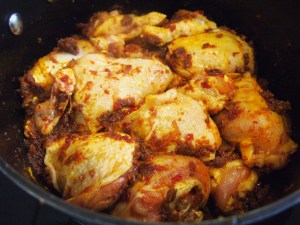
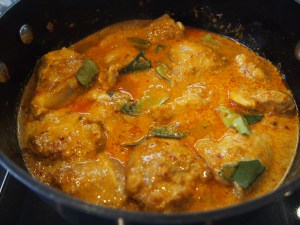
When the paste has been cooked increase the heat and add the chicken toss and stir the chicken until it is well coated in the paste and cook until it just starts to change colour.  The add the water, coconut milk, brown sugar, stock cube and lime leaves. Bring to a simmer and cook over a gently heat, partially covered for a good hour and 15-20 minutes. If you have used boneless chicken pieces you probably only need to cook for 1 hour.

Malaysian Chicken Curry

Check the chicken regularly and if the sauce is reducing too fast lower the heat more and put the lid on fully. At the end of the cooking time check the chicken – it should be fork tender and the sauce nicely thickened. If your sauce is too runny increase the heat and let it cook uncovered at a rapid simmer until reduced to your liking, however it is good to have a fair bit of sauce to mop up with rice or roti so don’t over reduce. Taste for seasoning and add more salt or sugar if required.

Kapitan Chicken - Malaysian Chicken Curry

Apr 22, 2016
mustardwithmutton

5 comments

Chocolate Salted Caramel Tart

Chocolate & Salted Caramel Tart

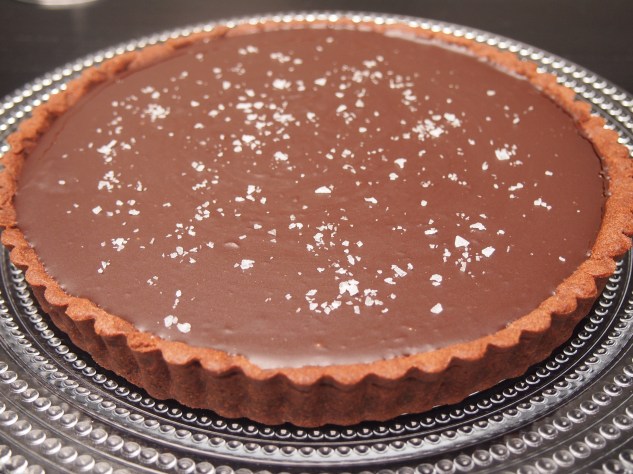
I wish I had taken a picture of this tart once it was sliced to show the just set and slightly runny caramel interior as it would sum up more than any words could just how delicious, rich and decadent this tart is. If you’re not a lover of caramel, especially the kind that just edges on being ever so slightly bitter, than this might not be the dessert for you. But if  you are then you need to make this and quickly. It’s not a tricky dessert to accomplish but you do need to make a caramel and I know that some people tend to encounter problems with this. The best tips I can give for making caramel is to use a very clean saucepan and have a pastry brush and a bowl of cold water handy to brush down any sugar crystals that form on the sides of the pan as the sugar melts. Those pesky crystals are the reason that your caramel may not be colouring but if you keep vigilantly brushing down the sides of the pan with a little cold water on a pastry brush then you shouldn’t encounter any problems. The other golden rule is never stir the caramel, just swirl the pan a little. My last warning on the caramel is to make sure you take it off the heat before it gets too dark. The darker it is the more bitter the caramel will become. I let the caramel cook for a little more than I should have and the caramel was slightly too bitter. A little bitterness is good as it’s a nice balance against all the sweetness but next time I will take the caramel off the heat as it just turns amber. This is very rich dessert so a thin slice is all that’s needed which makes this tart go a long way but it keeps well and is great for large parties.

Ingredients  Adapted from Donna Hay

¼ cup (25g) Dutch cocoa
1½ cups (225g) plain flour
125g unsalted butter, chilled and cubed
½ cup (80g) icing sugar
2 egg yolks
1 tablespoons iced water
sea salt flakes, for sprinkling

For the salted caramel:
1 cup (250ml) single (pouring) cream
50g unsalted butter
1½ cups (330g) white sugar
½ cup (125ml) water
1 teaspoon sea salt flakes

for the dark chocolate ganache:
150g dark chocolate, chopped
½ cup (125ml) single (pouring) cream

Method

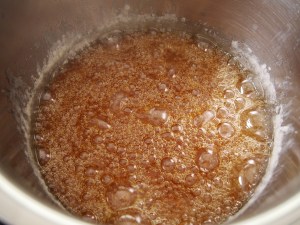
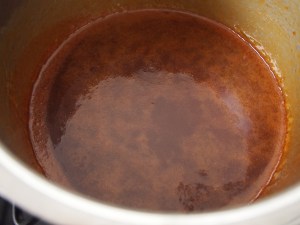
To make the salted caramel, Place the cream and butter in a small saucepan over medium heat and bring to the boil. Remove from the heat and set aside. Place the sugar and water in a medium saucepan over low heat and cook, swirling the pan, until the sugar is dissolved. Increase the heat to high, bring to the boil and cook for about 10 minutes, without stirring, until the mixture is a deep caramel colour – the darker the caramel becomes the more bitter it will be; if you prefer less of a bitter flavour take the caramel off the heat when it is a golden amber. Remove from the heat and working quickly, add the salt and cream and butter mixture and whisk to combine – be careful as the caramel will boil up when the liquids are added. Return to the heat and cook for a further 2 minutes or until thickened slightly.

Making Caramel Making Caramel

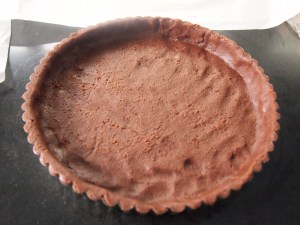
To make the pastry, place the cocoa, flour, butter and icing sugar in a food processor and process until the mixture resembles fine breadcrumbs. With the motor running, add the egg yolk. Add the iced water and process until the dough just comes together. Turn out onto a lightly floured surface and gently bring together to form a ball. Flatten into a disc, wrap in plastic wrap and refrigerate for 1 hour. Preheat oven to 180°C. Roll the pastry out between 2 sheets of non-stick baking paper to 3mm-thick. Line a lightly greased 24cm round loose-bottomed tart tin with the pastry.

Chocolate Pastry Tart Base Chocolate Pastry Tart Base

Trim the edges and prick the base with a fork. Refrigerate for 30 minutes. Line the pastry case with non-stick baking paper, fill with baking weights and bake for 15 minutes. Remove the paper and weights and bake for a further 10 minutes or until the pastry is just cooked. Allow to cool in the tin. Spoon the salted caramel into the tart shell and refrigerate for a 2–3 hours or until set.

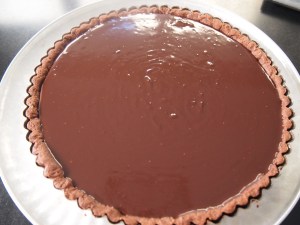
Salted Caramel Chocolate Tart Salted Caramel Chocolate Tart

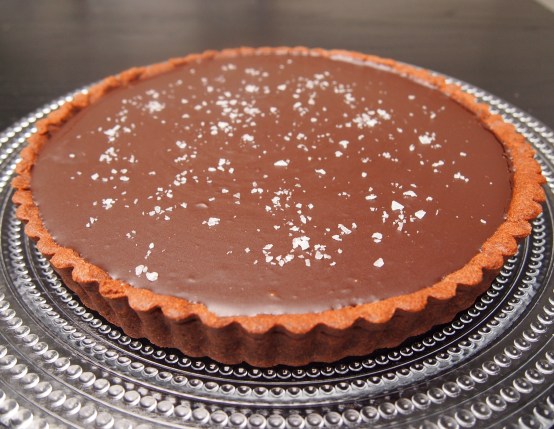
To make the dark chocolate ganache, place the chocolate and cream in a small saucepan over low heat and cook, stirring, until melted and smooth. Allow to stand for 10 minutes or until thickened slightly. Pour the chocolate mixture over the caramel and refrigerate for 1–2 hours or until set. Bring to room temperature and sprinkle with sea salt flakes to serve.

Donna Hay Salted Caramel Chocolate Tart

Apr 12, 2016
mustardwithmutton

no comments

Braciole with Pasta – Sunday Gravy

           Best Ever Braciole Amazing Pasta with Sunday Gravy

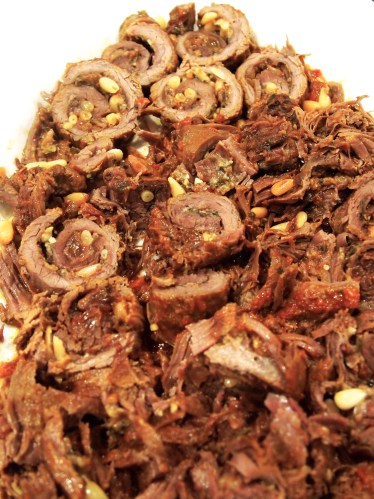
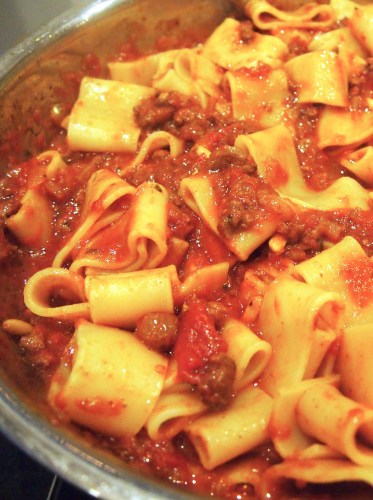
Anyone who is a fan of American mob movies such as Goodfellas or Sopranos will be familiar with the term Sunday Gravy. It’s an American Italian institution which involves a long simmered tomato sauce made with copious cuts of meat – everything from meatballs, pork ribs, sausages and most importantly, braciole. Braciole is a thin piece of beef, normally flank steak, that has been pounded out and then covered with a mixture of cheese, herbs and garlic and then rolled and tied in string. The idea of Sunday gravy is that the sauce is started in the morning and the various cuts of meat added as it simmers the whole day long, filling the house with amazing aromas until it’s finally dinner time at which point the meat is separated from the sauce, which of course tastes phenomenal from all the hours of long slow braising, and the meal is divided into two courses. The first course is the tomato sauce which is served with pasta and the second course consists of the meats with the braciole in the starring role, untied and cut into slices. Now this is a Sunday tradition I could get used to! My version is a little less heavy on the cuts of meat used but every bit as tasty. I like to make several small size braciole rather than one large one and I also like to serve the pasta with the tomato sauce and braciole at the same time – some of the slices adorning the top of the pasta and the rest on a platter in the centre of the table for everyone to help themselves. This dish takes a little bit of time to prepare and cook but it’s certainly not complicated and the rewards far outweigh the work.

Ingredients – Serves 6, generously  Adapted from Antonio Carluccio 

500g dried paccheri pasta – you could also use rigatoni, spaghetti or macaroni
½ cup Parmesan, freshly grated
Salt and pepper, to taste

For the Braciole:
6-8 large thin slices of beef pounded out thinly, you can use rump, flank steak or skirt steak
½ cup chopped fresh flat-leaf parsley
4 tablespoons raisins
2 garlic cloves, peeled and finely minced or grated
6 tablespoons Parmesan, freshly grated
3 tablespoons pine nuts
Salt & freshly ground black pepper

For the Sauce:
Olive oil
Large pinch of chilli flakes
Salt
2 onions, peeled and finely diced
100ml dry white wine
400g minced beef
800g canned crushed tomatoes, plus a little water to clean out the can
2 tablespoons tomato paste

Method

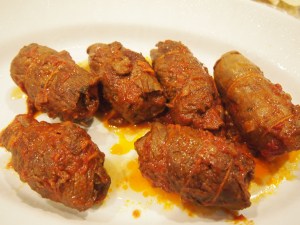
For the braciole, lay the slices of beef flat on a board. In a bowl, mix the parsley, raisins, garlic, parmesan, pine nuts and some salt and pepper. Spread a little of the filling onto the beef slices (if you have any extra stuffing keep it aside for the sauce). Roll each of the beef pieces up and bind with kitchen string.

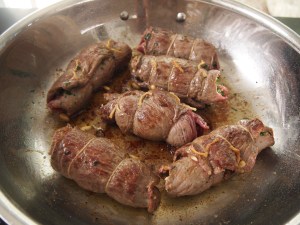
Braciole Braciole

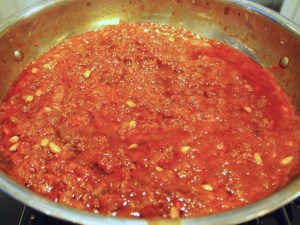
For the sauce, put a generous amount of oil in a heavy bottomed pan and fry the braciole for a couple of minutes on each side until nicely browned. Remove and set aside. To the same pan add the onion, along with a pinch of salt and the chilli flakes, and cook until softened, about 8 minutes. Add the wine and let the alcohol evaporate for a few minutes, scraping the bottom of the pan to deglaze. Add the beef and cook stirring until it has changed colour, at this point if you have any stuffing left over add it to the meat and stir through. Then add the tomatoes, the tomato paste and a scant teaspoon of salt.

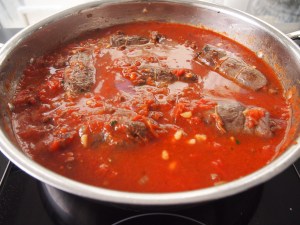
Sunday Gravy with Braciole

Stir well and add the braciole back to the pan along with any accumulated juices. Bring the mixture to a simmer and let it cook slowly over gentle heat, covered for 2 hours. Check it regularly, basting the beef rolls with the sauce and adding  a little water if necessary. Then cook for about another hour, uncovered, until the braciole are very tender. Again turning the braciole occasionally, and stirring the sauce. Check seasoning and add salt if required.

Braciole

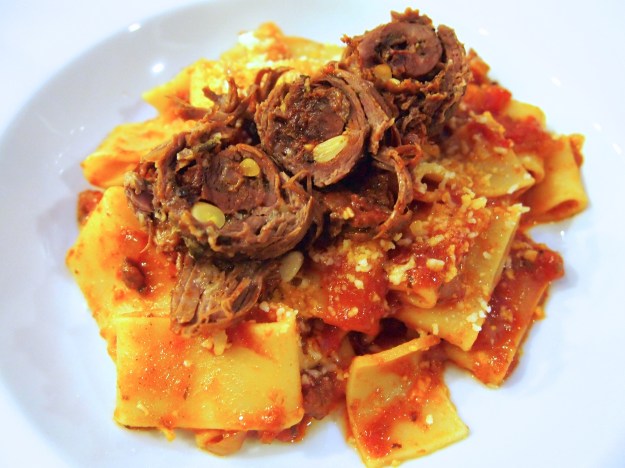
Cook the pasta in plenty of boiling salted water until al dente. As the pasta cooks remove the braciole from the sauce and place on a cutting board. Drain the pasta and stir through the sauce. Remove the string from the braciole and cut into 1cm slices. Serve the pasta into individual bowls topping each with a few slices of braciole and some grated parmesan. Serve the remaining braciole in the centre of the table.

Braciole with Tomato Sauce & Pasta

Apr 1, 2016
mustardwithmutton

9 comments

The Easiest & Tastiest Slow Roasted Leg of Lamb

Egyptian Slow Cooked Leg of Lamb

I should have published this post a week ago in time for anyone searching for lamb recipes  for Easter Sunday lunch but if you’re anything like my family then you probably eat lamb pretty regularly and not just at Easter. Our fondness for lamb has me constantly on the look out for new recipes, especially easy ones that involve slow braising.  I particularly enjoy shoulder and leg of lamb slow cooked and falling from the bone, for me, pink lamb is best saved for racks and cutlets. Not only does slow braising provide wonderful flavour but it is extremely forgiving as far as timing is concerned which makes it wonderful for entertaining. This recipe, which is Egyptian in origin, is not only one of the simplest I’ve come across but also the most unusual. No one would guess that the intensely flavourful sauce is made from a combination of finely grated carrots and onions. The long cooking times mean the carrots and onions release their sugars and caramelise forming a wonderful crust around and lamb and a tasty complex sauce.  I served this with Rick Stein’s Turkish baked pumpkin and cous cous but it would go just as well with more traditional roast accompaniments.

Ingredients – Serves 4-6   Adapted from Matters of the Belly Blog

One bone-in 2kg leg of lamb – if using a larger leg of lamb increase the ingredients accordingly but the cooking time will be roughly the same.
2 large onions, finely grated
2 large carrots, finely grated
4 cloves garlic, minced
1 teaspoon ground cardamom
2 teaspoon mixed allspice
1 teaspoon crushed pepper flakes – use less if you want milder heat or leave it out altogether
1 ½ teaspoon salt

Method

Place the lamb in a large dish and add all the other ingredients, massaging and rubbing them well all over the lamb leg. Cover with plastic wrap and marinate in the fridge overnight. This step is crucial. The next day, preheat the oven to 160C (or 150C fan forced). Remove the lamb from the fridge and let it come to room temperature. Place the lamb in a roasting tin or a large oven proof dish with a lid, I used a Le Creuset dutch oven. If you are using a roasting pan make sure it is one that fits the lamb leg snuggly. Place it into the oven and cook for 3 hours, covered (if you are using foil make sure that it is a double layer and very tightly sealed so as little steam as possible escapes.)

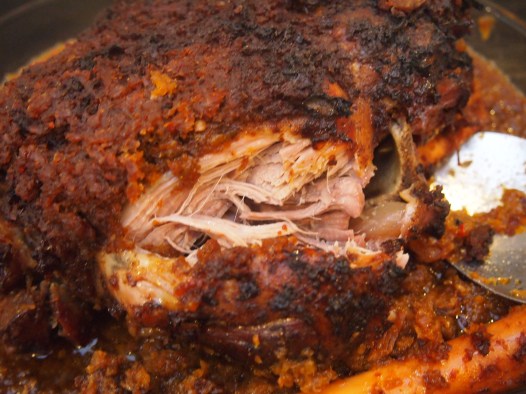
After 3 hours, remove the lid or the foil, and roast for another 2-3 hours. (I found 2½ hours was enough for a 2kg leg of lamb). During this part of cooking, you will need to check on the lamb every half hour or so. Using a large spoon, scoop up some of the sauce over the lamb to baste it a couple of times. If the pan is getting too dry, add some hot water, about a half a cup at a time. You will notice the crust of the lamb will be getting darker and darker; this is good! Just make sure there is enough liquid in the pan so that nothing burns. The lamb is ready when it becomes fork-tender, and you can easily shred it off the bone. Take the lamb out of the oven, and using a spoon, skim as much fat as possible off the gravy. Serve with cous cous, rice, or roast potatoes.

Egyptian Slow Roasted Leg of Lamb

Mar 22, 2016
mustardwithmutton

no comments

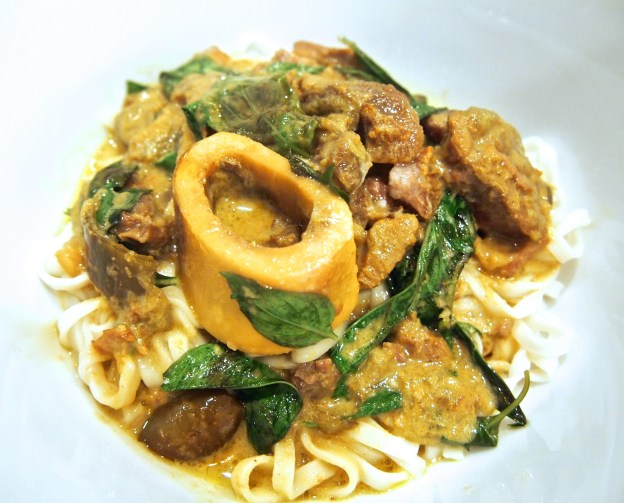
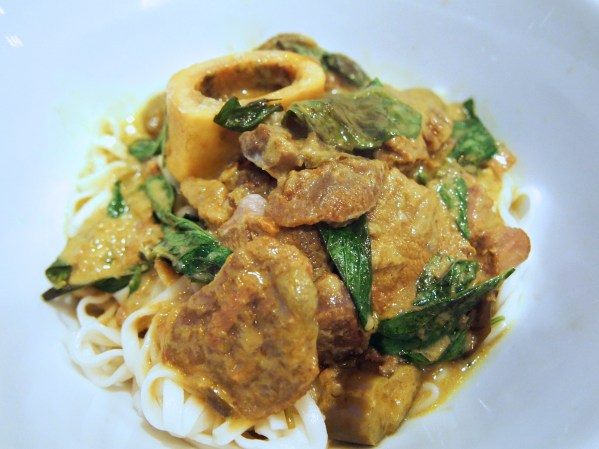
Green Beef Shank Curry with Noodles

Green Beef Shanks Curry with Noodles

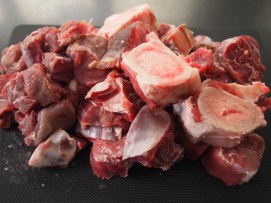
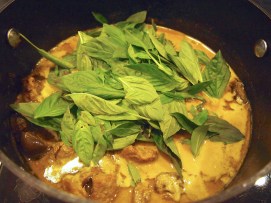
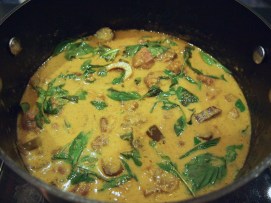
This recipes was inspired by one of my favourite Thai dishes, Khao Soi – egg noodles with rich chicken curry. I wanted to use the same basic concept but utilise green curry instead of red and use meat instead of chicken. The Green curry of beef in this recipe is pretty authentic but it’s a lot thicker than a traditional green curry. I also added some curry powder to the paste to replicate some of the flavours found in khao soi.  You can use any type of beef you like but I particularly like beef shank. The slow cooking makes it meltingly tender and the bones add a lot of flavour to the sauce, not to mention how delicious the marrow is. As for the noodles, try to find fresh Chinese flat wheat noodles but even rice noodles would work well. This is comfort food at its best!

Ingredients – Serves 4

1kg beef shank on the bone cut into large chunks. I used beef osso bucco
½ cup coconut cream
4 tablespoons best quality green curry paste – you can use more if you want it to be particularly spicy
1 tablespoon mild curry powder
1 x 400ml can coconut milk
3 Japanese eggplant cut into 1 inch pieces
2 tablespoons fish sauce
2 tablespoon palm sugar or brown sugar
Salt
1 cup Thai basil leaves
400g noodles – fresh Chinese flat white noodles or dried flat rice noodles cooked according to package instructions

Method

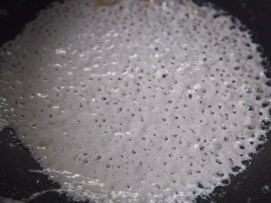
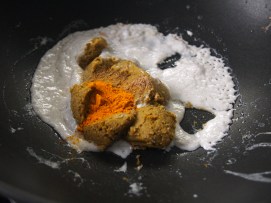
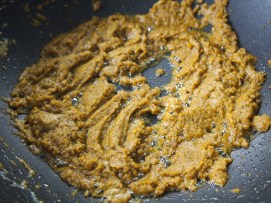
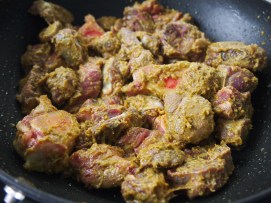
Place the coconut cream in  heavy bottomed saucepan over medium heat. Cook the coconut cream until the oil starts to separate from the cream. This should take about 5 minutes. Add the green curry paste and the curry powder and continue to stir and cook for a good 10 minutes until the paste is well cooked and the oil is starting to separate from the paste. Regulate your heat to make sure the spices and paste don’t burn.


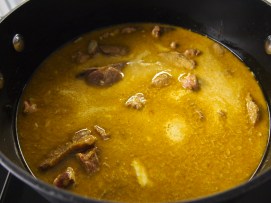
Add the beef and stir well, ensuring that all the pieces are covered in the paste and cook for a few minutes to lightly seal the meat. Add the coconut milk, the fish sauce and the sugar along with a teaspoon of salt. There should be enough liquid to just cover the meat, if not add some water.


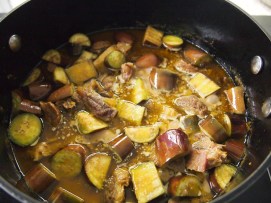
Bring to the boil, then lower the heat and partly cover the pan and let it simmer until the meat is tender, beef shanks will take about 2 – 2½ hours. When the meat is ready add the eggplants and bring to a boil. Cook uncovered for about 8 minutes until the eggplants are tender.


The sauce should be thick and creamy but there should be enough of it to be able to generously pour over the noodles. If your sauce has reduced too much and you want more, add some water from a recently boiled kettle and bring back to a simmer. Taste for seasoning and add more sugar, salt or fish sauce if required. Turn off the heat and stir in the Thai basil. To serve place some noodles into each bowl then ladle in the beef curry and sauce.

Green Beef Shanks Curry with Noodles

Mar 15, 2016
mustardwithmutton

1 comment

Persian Baked Chicken with Saffron & Barberries

Persian Baked Chicken - Onions, Tomatoes, Saffron

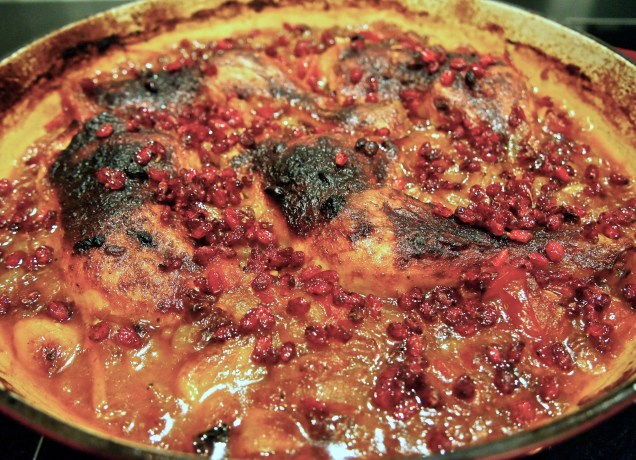
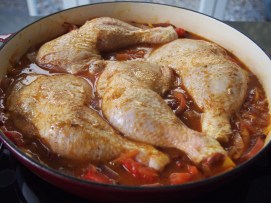
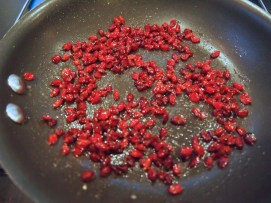
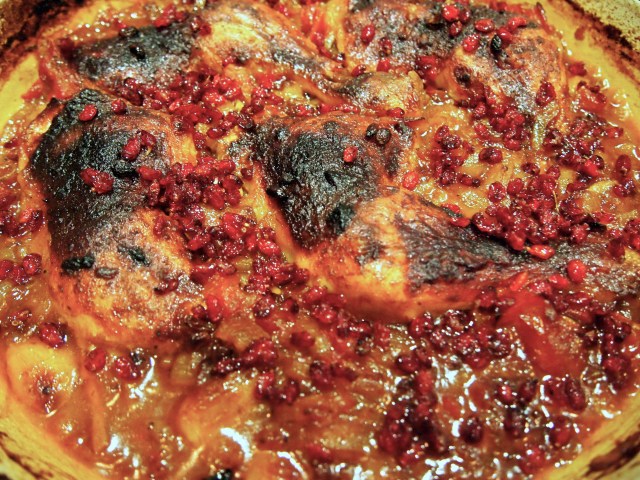
I must confess that this baked chicken is not a traditional Persian dish but rather my own invention.  When I’m cooking a Persian meal for a large crowd I like to serve a variety of Khoresht (meat based stews) along with Persian steamed basmati rice and I often feel that a poultry dish of some description would be a nice addition to round out the meal, which is how this recipe came about. Whilst this baked chicken may not be traditional it does combine all my favourite Persian flavours like saffron, turmeric, onions, and barberries. It’s very flavourful and incredibly easy to throw together. I like to bake the chicken at a low temperature for a long time. To get the perfect result of tender chicken and  crispy skin I cook the chicken covered for most of the cooking time and then uncovered, at a higher temperature, towards the end which allows the skin to get nice and crisp. Cooking the chicken in this manner means that not only is the chicken fork tender but the sauce also has time to become wonderfully reduced and flavoursome. Barberries are small Persian berries with a sweet and sour flavour and a fabulous jewel red colour. You can find them at Middle-Eastern or Persian grocers as well as on-line. It’s hard to replicate their flavour but dried cranberries would be the closest substitute.

Ingredients – Serves 4 -6

4 Chicken Marylands (chicken legs with the drumstick and thigh attached)
Salt & Pepper
Neutral flavoured vegetable oil
3 large red onions, sliced
12 cloves of garlic, peeled and left whole
½ inch piece of ginger, finely sliced into match sticks
1 teaspoon ground coriander
½ teaspoon ground cinnamon
½ teaspoon turmeric
¼ teaspoon ground cardamom
3 medium size tomatoes, roughly chopped
1 cup warm chicken stock
Large pinch of saffron
½ cup barberries
2 tablespoons honey, divided
Juice of 1 large lemon
½ teaspoon sugar

Method

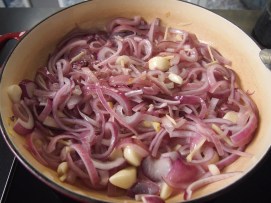
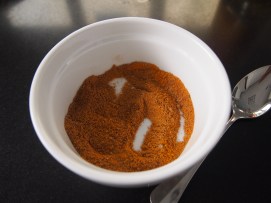
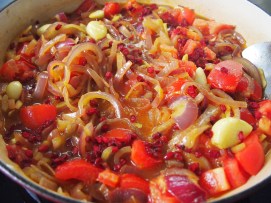
Pre-heat the oven to 160C. In a large oven proof baking dish (I use a shallow Le Creuset) heat a couple of tablespoons of oil over medium heat and when hot add the onions along with a pinch of salt. Cook until the onions are soft. Add the garlic and ginger and cook for another couple of minutes. In a small bowl combine all the dry spices, other than the saffron. Add half the spice mixture to the onions, stir well and cook for a minute. Add the tomatoes and one tablespoon of the honey and cook until the tomatoes have softened a little, about 5 minutes.


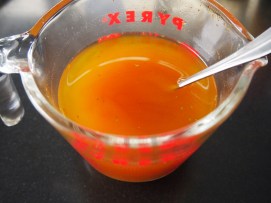
While the tomatoes are softening, place the saffron into the warm chicken stock and allow it to infuse then add it to the tomatoes in the pan. Bring to the boil then turn off the heat and add half the lemon juice and half the barberries, some salt and pepper and stir to combine. Place the chicken on a plate and season the chicken well with salt and pepper. Add the remaining spice mixture, the rest of the honey and lemon juice as well as 1 tablespoon of oil to the chicken pieces and massage it all well onto all sides of the chicken, then place the pieces skin side up in the baking pan, nestling them in the sauce but making sure that most of  the skin is exposed.


Cover the pan with a tight fitting lid or foil, place in the oven and cook for 2 hours. After this time remove the lid/foil and raise the temperature to 200C and cook for a further 30 minutes. Whilst the chicken is cooking heat a tablespoon of oil in a small skillet over gentle heat. Add the remaining barberries and ½ teaspoon of sugar and cook until the sugar has melted and the barberries and glistening and warm. Remove the chicken from the oven and sprinkle over the sautéed barberries. Serve straight from the pan with steamed rice or cous cous.

 Middle eastern Baked Chicken with Tomatoes & Saffron